

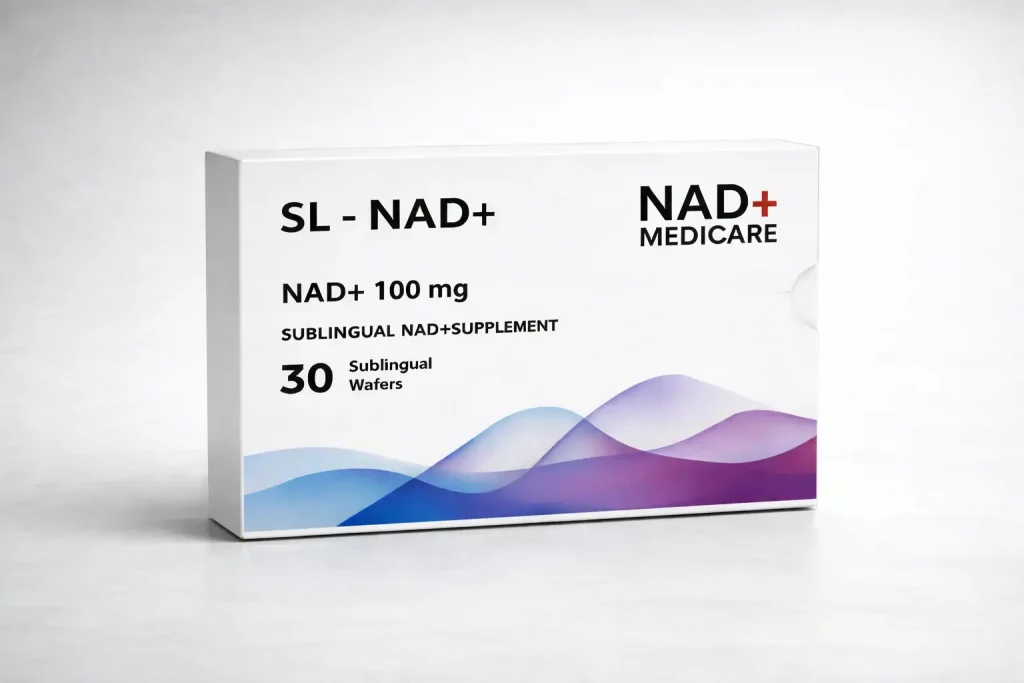
High-purity 100mg NAD+ sublingual wafers to support cellular energy, cognitive function, and healthy ageing. Fast-absorbing for convenient daily use at home.
£79 £90
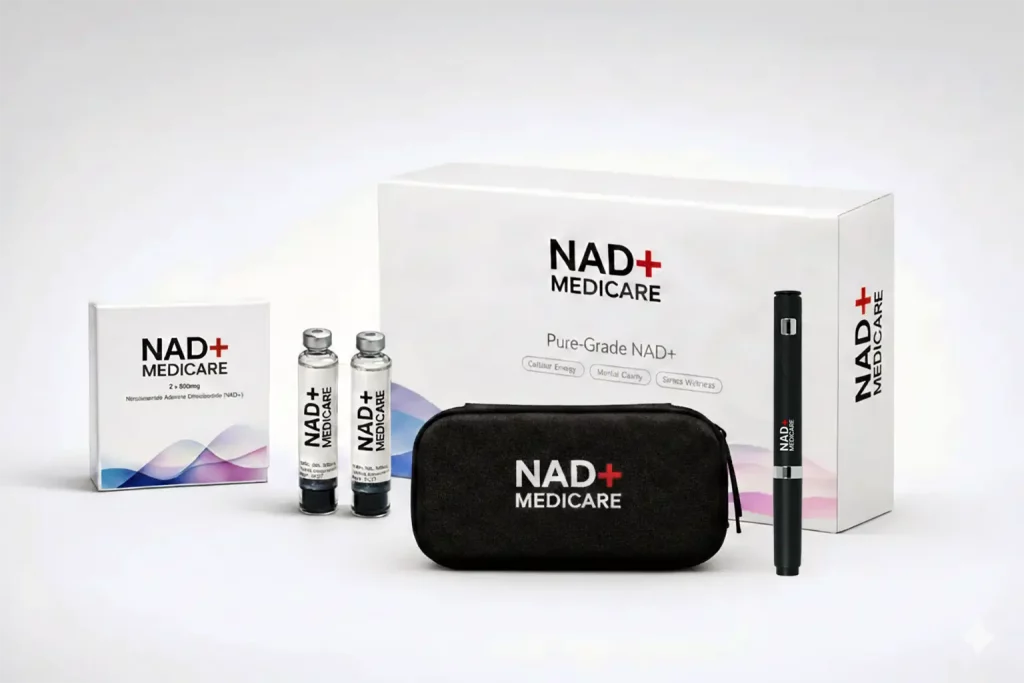
Premium NAD+ pen system with two 500mg cartridges for structured at-home support. Designed to promote mitochondrial function, mental clarity, and cellular vitality.
£349 £450
What Is a Cellular Energy Supplement?
A cellular energy supplement is designed to support energy production at the most fundamental level — inside your cells.
Unlike stimulants that temporarily increase alertness, cellular energy supplements focus on biological processes that help your body generate energy naturally. The goal is not artificial stimulation. The goal is metabolic efficiency.
Energy is produced inside structures called mitochondria. These microscopic “power plants” convert nutrients into ATP (adenosine triphosphate), the primary energy currency of the body. When mitochondrial efficiency declines, overall energy output can decrease as well.
Why Cellular Energy Matters
Energy is not just about feeling awake. It influences:
-
Physical performance
-
Cognitive clarity
-
Recovery capacity
-
Metabolic function
-
Overall vitality
As we age, cellular efficiency naturally changes. Mitochondrial performance and certain coenzymes involved in energy production may decline over time. Supporting these systems becomes increasingly relevant after the age of 30.
Key Nutrients Often Found in Cellular Energy Supplements
While formulations vary, many cellular energy supplements include ingredients that support mitochondrial function and metabolic pathways, such as:
-
NAD+ (Nicotinamide Adenine Dinucleotide)
-
Coenzyme Q10 (CoQ10)
-
B vitamins
-
Magnesium
-
L-carnitine
These compounds are involved in converting food into usable cellular energy.
NAD+ and Cellular Energy
NAD+ plays a central role in energy metabolism. It helps transport electrons during cellular respiration — a critical step in ATP production.
As NAD+ levels naturally decline with age, interest in supplementation has grown. Supporting NAD+ availability may contribute to maintaining mitochondrial efficiency and metabolic balance.
Sublingual delivery systems are often used to support faster absorption compared to traditional capsules.
Who May Consider a Cellular Energy Supplement?
-
Adults over 30 experiencing gradual energy changes
-
Professionals with demanding cognitive workloads
-
Athletically active individuals
-
Those focused on longevity and metabolic health
-
Individuals seeking sustained energy without stimulants
If the objective is long-term vitality rather than short-term stimulation, supporting cellular function is a logical strategy.
Cellular Energy vs. Stimulants
There is a major difference between stimulating the nervous system and supporting cellular metabolism.
Stimulants:
-
Provide temporary alertness
-
May cause energy crashes
-
Do not improve cellular efficiency
Cellular energy supplements:
-
Support natural ATP production
-
Focus on mitochondrial function
-
Align with long-term wellness strategies
Sustainable energy begins at the cellular level.
Final Thoughts
A cellular energy supplement is not a quick fix. It is part of a broader approach that includes sleep, nutrition, exercise, and stress management.
If your goal is to support energy at its biological source, focusing on mitochondrial health and key metabolic cofactors is a rational and structured approach.
Disclaimer: This content is for informational purposes only and does not constitute medical advice. Food supplements are not intended to diagnose, treat, cure, or prevent any disease. Always consult a qualified healthcare professional before starting any new supplement.